
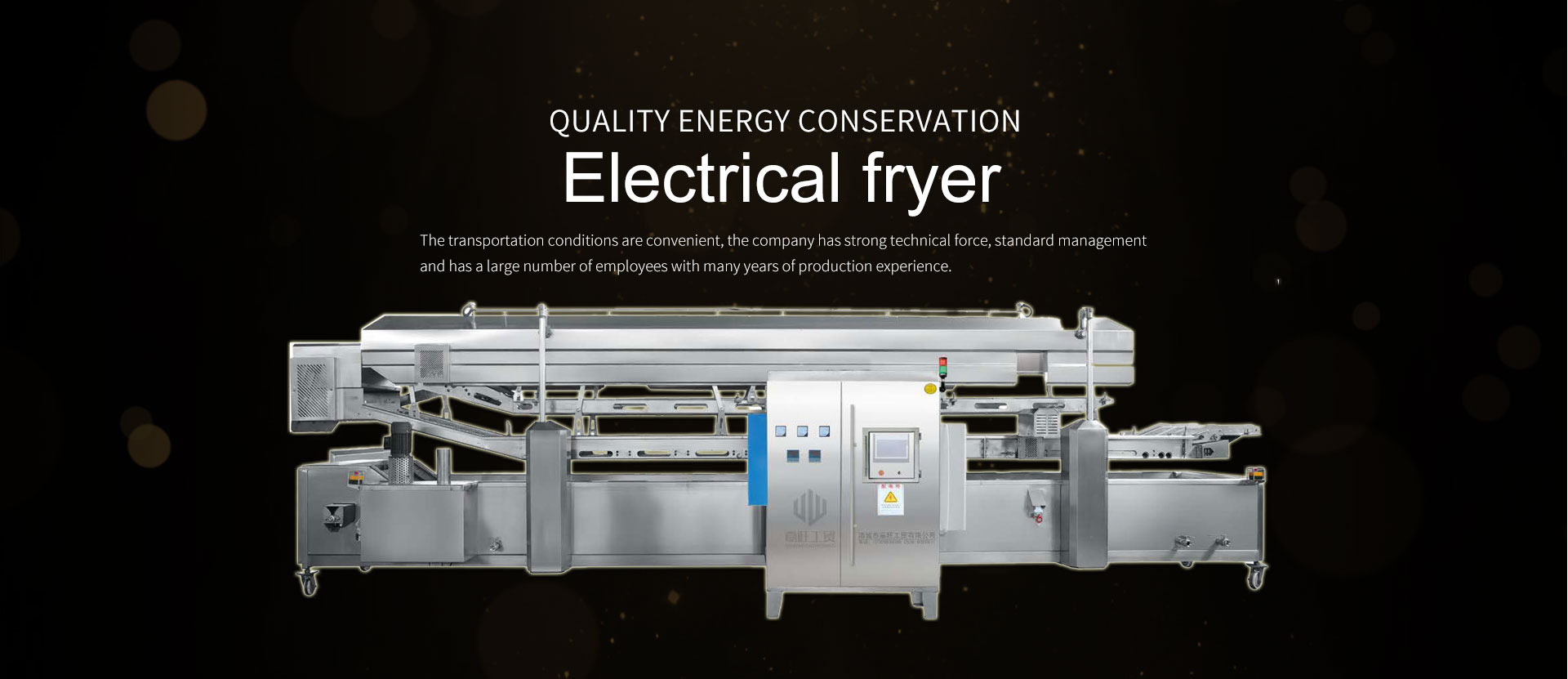
When does an Electrical fryer start limiting your menu instead of supporting it? As demand grows, a fryer that once seemed efficient can create bottlenecks in output, consistency, food quality, and safety. For operators, buyers, and technical evaluators in bakery and food production settings, understanding the signs of undersizing is essential to making smarter equipment decisions and protecting long-term profitability.
In bakery and snack production, fryer size affects much more than hourly output. It influences dwell time, oil recovery, batch rhythm, labor allocation, cleaning frequency, and even which products can be offered without quality compromise. A compact electrical fryer may work well for a focused menu, but once product mix expands, the same unit can become a hidden constraint.
This matters to multiple decision makers. Operators feel the pressure first through slower turnaround and unstable frying results. Quality and safety teams see rising variation in color, moisture, and oil pickup. Procurement and business leaders see the issue later, often as missed orders, overtime cost, or reduced margin on high-demand items.
For bakery equipment buyers comparing electrical fryer systems, oil management equipment, steam tunnel machines, steam cabinets, and cooking lines, the key question is not simply “How many liters does the tank hold?” It is whether the fryer matches real menu complexity, target throughput, product size, and future growth over the next 12–36 months.
The first signs your electrical fryer is too small
An undersized fryer rarely fails all at once. The earliest warning signs are operational. You may notice longer queues between prep and frying, more frequent loading delays, or a need to split what should be one batch into 2 or 3 smaller cycles. In a bakery or prepared food setting, this disrupts the entire line balance, especially when proofing, steaming, frying, and packing are scheduled in sequence.
Temperature recovery is another major indicator. If the fryer drops sharply after loading and takes more than 60–90 seconds to recover to the target range, product color and texture become harder to control. Items with coatings, fillings, or high moisture content are especially sensitive. Repeated temperature sag may force operators to lower batch size, which reduces output even further.
Menu limitation often appears before a capacity crisis. A fryer that handles donuts or simple snacks well may struggle when the menu expands to stuffed pastries, fried buns, croquettes, or layered dough products. These items can require different residence times, oil depths, or loading density. If operators must constantly choose between speed and quality, the fryer is already too small for the menu.
Labor behavior also reveals capacity mismatch. When staff begin using workarounds such as overloading baskets, reducing drain time, skipping oil skimming, or delaying cleaning to maintain pace, the equipment is no longer supporting efficient production. These shortcuts usually show up 4–8 weeks before quality complaints become visible to managers.
Common operational symptoms
- Batch output falls below planned demand during peak periods of 2–4 hours.
- Oil temperature swings exceed a typical working band of about 5°C–10°C after loading.
- Drain and transfer areas become congested because products wait for fryer availability.
- Menu expansion requires extra shifts instead of smoother line flow.
- Cleaning intervals shorten because overloaded oil breaks down faster.
The table below helps distinguish between a fryer that is merely busy and one that is structurally undersized for current production needs.
If 3 or more of these conditions appear regularly, the issue is usually not training alone. It points to a capacity mismatch between fryer design and real menu demand. At that stage, increasing operator effort rarely solves the root problem for long.
How fryer size affects menu quality, safety, and profitability
A fryer that is too small can reduce profitability in ways that are easy to overlook. The direct impact is lower throughput, but the indirect cost often becomes larger. Products may absorb more oil due to unstable temperature, coatings may darken before the center is fully cooked, and fragile bakery items may break when operators rush loading and unloading. Even a 3%–5% increase in waste or rework can materially affect margin over a quarter.
Safety and hygiene risks rise as utilization climbs above practical limits. When operators continuously run the fryer at near-full capacity for 6–10 hours per shift, oil degradation accelerates. Crumbs and fines accumulate faster, and cleaning is more likely to be postponed. This increases the chance of off-flavors, smoke, inconsistent browning, and unsafe handling conditions around hot oil and transfer zones.
For quality control teams, the challenge is repeatability. Menu items such as yeast-raised donuts, filled dough products, snack pellets, or battered bakery hybrids require stable process windows. A small fryer can narrow that window so much that minor differences in dough weight, surface moisture, or loading pattern create visible defects. That makes standardization harder across shifts, sites, or franchise locations.
Commercially, the biggest hidden loss is opportunity cost. If a fryer limits your ability to launch 2 or 3 new items, support seasonal peaks, or accept larger orders from distributors, the equipment is constraining revenue strategy. In expanding bakeries and food factories, the right frying system should support the menu roadmap, not only today’s average volume.
Why menu complexity matters more than nominal capacity
Nominal tank volume is only one variable. Real performance depends on product loading ratio, oil depth, recovery power, filtration frequency, and dwell-time compatibility across the menu. A fryer producing one uniform SKU at 80% load may perform acceptably, while the same unit serving 5 SKUs with different frying profiles may become inefficient at only 60% practical utilization.
Typical impacts of undersizing
- Higher oil absorption due to low temperature recovery.
- Inconsistent surface color between the first and last batch in an hour.
- Longer queue time between proofing, steaming, baking support steps, and frying.
- Reduced menu flexibility during promotions and seasonal demand spikes.
In many production environments, upgrading fryer size also improves the performance of upstream and downstream equipment. A balanced line may include oil filtration, oil tank support, steaming and baking machines, or a steam tunnel machine. When one fryer becomes a choke point, the rest of the process cannot run at its designed efficiency.
How to evaluate the right fryer capacity for your menu
A sound fryer evaluation starts with production reality, not brochure numbers. Decision makers should map the top 5–10 products by volume, identify peak hourly demand, and record each item’s target frying time, oil temperature range, and batch density. This gives a more accurate capacity picture than relying on daily totals alone. A line producing 1,200 pieces per hour for 3 peak hours is very different from one producing the same total over an 8-hour shift.
It is also useful to calculate a practical utilization ceiling. In many food production settings, sustained operation above about 75%–85% of practical capacity leaves too little room for recovery, cleaning, and menu changeover. If current demand already reaches that range, and new product launches are expected within 6–12 months, the fryer may need to be upsized now rather than after repeated bottlenecks occur.
Technical evaluators should look beyond chamber size and review total heating power, heat distribution, filtration compatibility, drain design, and maintenance access. Procurement teams should compare not only purchase price, but labor cost, oil turnover rate, cleaning time, and expected flexibility for future products. A larger, better-matched fryer often reduces total operating cost even if its initial investment is higher.
For businesses serving mixed bakery and snack menus, integrated support equipment may matter just as much as fryer size. A matched solution that includes oil handling, filtration, and controlled transfer can extend oil life, support hygiene compliance, and reduce variation. In some applications, reviewing an Oil fryer option alongside an electrical fryer comparison helps clarify whether the current process problem is energy source, tank volume, or whole-line design.
A practical capacity checklist
The following table summarizes a practical framework for sizing a fryer in bakery and prepared food operations.
This checklist shows why fryer selection should be based on process data, not only nominal dimensions. In many cases, a line that appears adequate on paper is already operating too close to its limit in real production conditions.
Four questions buyers should ask
- Can the fryer support at least 15%–25% growth without compromising recovery?
- Does the line include practical oil filtration and safe oil transfer support?
- How long does cleaning take per shift, and what is the impact on uptime?
- Will the fryer accommodate both current and planned product sizes?
Implementation, layout, and equipment matching in bakery production
Choosing a larger fryer is only part of the answer. The implementation must fit the production layout. In bakery equipment projects, fryer performance depends on surrounding systems such as feed tables, de-oiling zones, oil filters, oil tanks, steam cabinets, and product transfer paths. If line arrangement forces operators to make extra turns, wait at transfer points, or move hot products manually across long distances, some of the capacity gain will be lost.
Project managers should review the sequence from dough preparation to final discharge. Products that are steamed before frying, partially baked before finishing, or combined with seasoning and cooling steps require a stable takt time across the line. A fryer with 20% more effective capacity may not deliver full value if the downstream draining or packing area only handles current output. Capacity planning should therefore cover the whole process, not one machine in isolation.
Maintenance access is another critical factor. A fryer squeezed into a tight corner may look space-efficient, but if daily inspection, oil draining, or heater access takes too long, service discipline declines. In practical terms, technical teams should allow working space for routine checks, residue removal, and safe oil handling. Even 600–800 mm of access clearance can make a meaningful difference in cleaning quality and turnaround time.
Dealers, distributors, and plant decision makers should also consider line modularity. Businesses often start with a focused menu, then add new SKUs over 12–24 months. Equipment that integrates well with oil management systems, transfer conveyors, or auxiliary cooking solutions provides more flexibility than a fryer selected only for its entry-level price. This is especially relevant in facilities planning future expansion into steamed-and-fried or baked-and-fried products.
Implementation priorities for smoother expansion
- Map upstream and downstream capacity before changing fryer size.
- Plan oil filtration and storage as part of the frying solution, not as an afterthought.
- Verify utility requirements such as power load, ventilation, and drainage.
- Set acceptance criteria for color consistency, recovery time, and hourly output before installation sign-off.
A second review of process alternatives can also be valuable. In some applications, comparing an electrical fryer with an Oil fryer and related oil handling equipment helps clarify whether the production goal is lower operating intervention, larger thermal reserve, or improved product adaptability across multiple SKUs.
FAQ: common selection mistakes and practical buying advice
How do I know whether the issue is fryer size or poor operation?
Start with three measurements over at least 5 working days: peak hourly output, average temperature recovery time, and defect rate by batch. If trained operators follow the same method but still experience recurring delays, unstable color, or repeated need to reduce load size, the root cause is more likely capacity than training. Operational issues usually create irregular problems; undersizing creates predictable bottlenecks every peak period.
What growth margin should be considered when buying a new fryer?
Many buyers aim for 15%–30% headroom above current peak demand, depending on menu volatility and seasonal cycles. If the business supplies distributors, handles holiday peaks, or plans new SKUs within 12 months, staying near the upper end of that range is often safer. Too little headroom can force another upgrade much sooner than expected.
Is a bigger fryer always better for bakeries?
No. Oversizing can increase oil inventory, utility demand, startup time, and cleaning workload. The goal is not the biggest tank but the right match between product mix, target output, oil care process, and layout. For a focused menu with stable demand, a right-sized fryer with strong recovery and good filtration may outperform a larger but poorly integrated system.
What should procurement teams request from suppliers?
Ask for a capacity discussion based on your actual products, not generic claims. Provide product dimensions, target hourly output, frying time, shift length, cleaning routine, and expected expansion. Request clarification on heating performance, oil management compatibility, maintenance points, installation conditions, and typical lead time. A useful supplier conversation should help you compare 4 areas clearly: throughput, consistency, serviceability, and expansion fit.
An electrical fryer becomes too small when it no longer protects process stability across your real menu. The clearest signals are repeated batch splitting, slow recovery, rising variation, and operational shortcuts used to chase demand. In bakery and food production, these issues affect more than speed; they shape product quality, safety control, labor efficiency, and commercial flexibility.
For operators, engineers, buyers, and business leaders, the best decision comes from evaluating the fryer as part of a complete production system that may include oil filtration, oil tanks, steam processing equipment, and downstream handling. A well-sized solution supports today’s output while leaving room for the next stage of menu growth.
If you are reviewing current frying performance or planning a line upgrade, now is the right time to compare requirements, identify bottlenecks, and request a tailored equipment recommendation. Contact us to discuss your application, get a customized solution, and learn more about bakery frying and integrated processing options.
Online Consultation